
 Deutsch
 English

Agilight
Project manager: Max Schwinn
Development of a lightweight frame structure made of fiber-reinforced plastics and innovative, hybrid joint areas for use in agricultural machinery
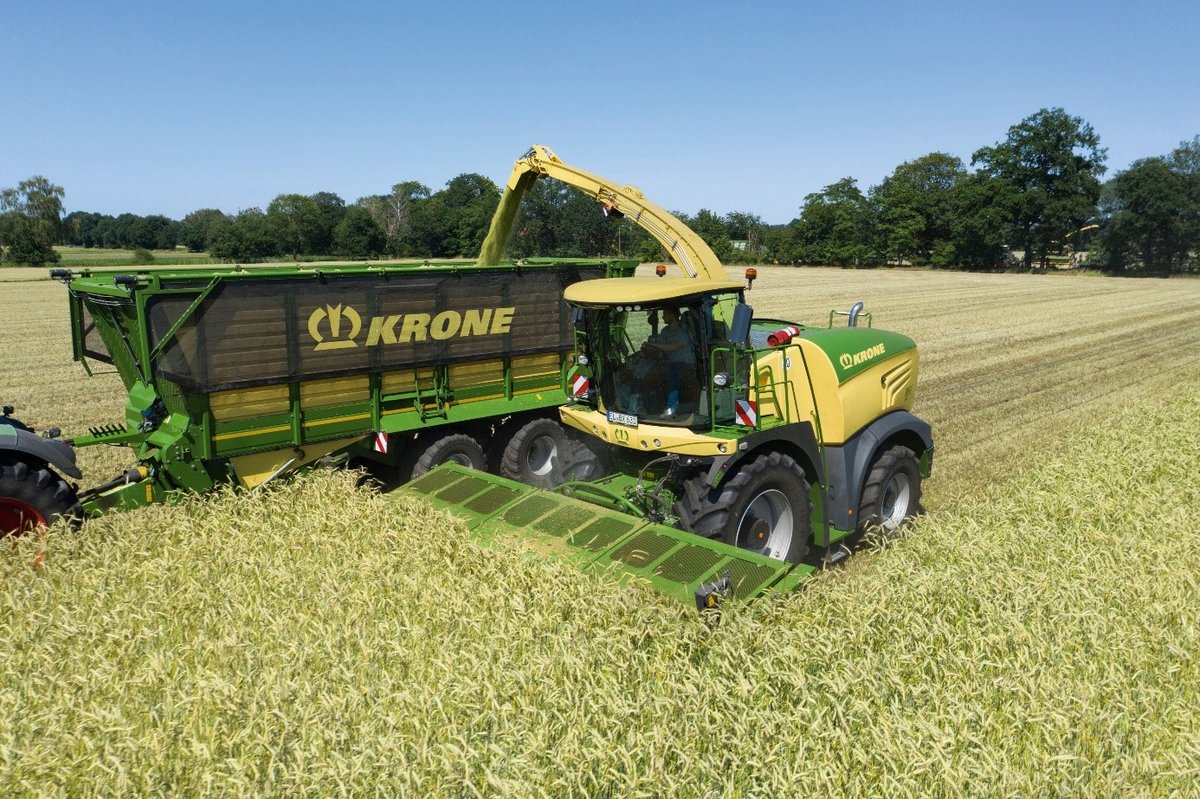
The AgriLight project is a collaborative effort between Maschinenfabrik Bernard Krone GmbH & Co. KG, M&D Composites Technologie GmbH, the Institute for Manufacturing Technology and Machine Tools (IFW), and the Institute for Polymer Materials and Plastics Technology (PuK). The project is funded by the Federal Ministry for Economic Affairs and Energy as part of the Technology Transfer Program for Lightweight Construction (TTP LB).
The goal of the project is to fundamentally advance the design of the central, heavily stressed frame structure of heavy agricultural harvesters in order to significantly reduce the weight of this component, which typically weighs several metric tons. This includes the following subgoals:
- Use of modern fiber-reinforced plastic composites and hybrid construction methods to reduce the weight of heavily stressed structures
- Reducing fuel consumption and lowering exhaust emissions
- Reducing soil compaction caused by the harvester and improving living conditions for soil organisms
- Simplified road traffic registration for self-propelled harvesters
- Reducing assembly times and costs for the harvester manufacturer
To this end, the existing steel structure and associated functional units of a forage harvester for corn harvesting—such as tanks, are analyzed and, for the first time, rebuilt using a functionally integrated lightweight construction approach based on glass-fiber and carbon-fiber composite materials (GFRP / CFRP) and comprehensively tested. This type of material substitution poses particular challenges due to the sometimes fundamentally different mechanical, electrical, and chemical properties of the materials. At the same time, fiber composites require different manufacturing processes and offer new shaping possibilities. To fully exploit the potential of lightweight construction, these properties are taken into account during the design process and utilized effectively. Another focus is on researching new approaches to local structural hybridization through the integration of metallic inserts at failure-critical, highly stressed interfaces with adjacent assemblies at various stages of the manufacturing process. Based on findings from fundamental research, new concepts are being developed that enable, on the one hand, the transfer of high loads into the composite structure and, on the other hand, the use of established metalworking joining methods during assembly with fiber-reinforced composites. At the end of the project, extensive mechanical testing of the new frame structure is planned on specialized test benches that simulate real-world conditions and provide important insights into the component’s suitability for series production.
Duration: 2021–2024